
The Catalogue Problem
What Cinema Can Learn From Music Streaming's Old Song Addiction

There is a statistic from the music industry that should keep every cinema executive awake at night. According to Luminate’s 2024 year-end report, catalogue music (defined as tracks older than 18 months) now accounts for 73.3% of all album consumption in the United States, up from 72.7% the previous year. Streaming of current music actually declined by 3.3% in the first half of 2025, even as overall global audio streams surged past 5.1 trillion for the full year, a 9.6% increase. The music business is growing, in other words, but it is growing on the backs of the dead and the retired talent.
This is not a blip. It’s definitely not a one-off. It’s a structural condition. And cinema is sleepwalking towards a version of the same problem. How?
The Bohemian Rhapsody Effect
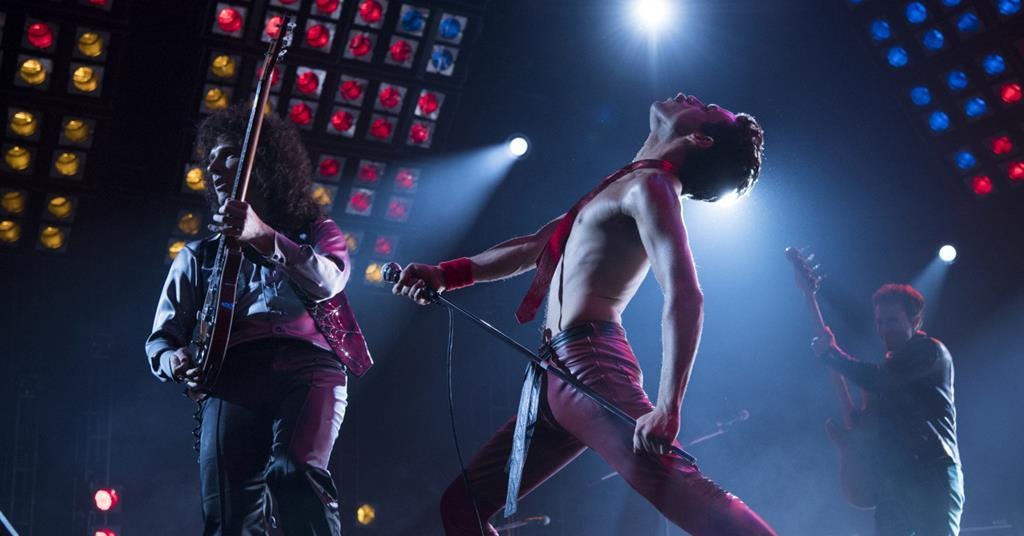
To understand why catalogue dominance matters, you need to understand how it works in practice. When a Spotify user puts on a playlist while cooking dinner, the algorithm is not optimising for artistic discovery. It is optimising for engagement, which means serving familiar comfort. The result is that Queen’s “Bohemian Rhapsody”, Fleetwood Mac’s “Dreams”, and Kate Bush’s “Running Up That Hill” (given a second life by Stranger Things) accumulate billions of streams not because listeners are actively choosing them, but because the architecture of lean-back listening favours the known over the new.
Cinema has its own version of this. Every summer, Grease and Mamma Mia! return to screens with the reliability of swallows to Capistrano. These are the “Bohemian Rhapsodies” of repertory cinema: evergreen titles whose audience renewal is essentially automatic. Nobody needs to make the case for showing Grease in August. The case has been made for nearly fifty years. (Bohemian Rhapsody the film, however, is not - yet - the “Bohemian Rhapsody” the song, of summer cinema, if that makes sense.)
But beyond these perennials, the repertory cinema landscape is increasingly shaped by two reactive triggers: anniversaries and deaths. Park Circus, the Glasgow-based distributor that handles library titles for studios including Warner Bros. across the UK and (as of 2025) France, released Stanley Kubrick’s Barry Lyndon in a new 4K restoration for its 50th anniversary last year. Paramount has scheduled Top Gun for its 40th anniversary re-release on 13 May 2026. Park Circus’s Q1 2026 booking guide lists Labyrinth (40th anniversary), Romeo + Juliet (30th anniversary), Moulin Rouge! (25th anniversary), and A Knight’s Tale (25th anniversary, 4K restoration). The pattern is clear: the calendar of round numbers drives programming.
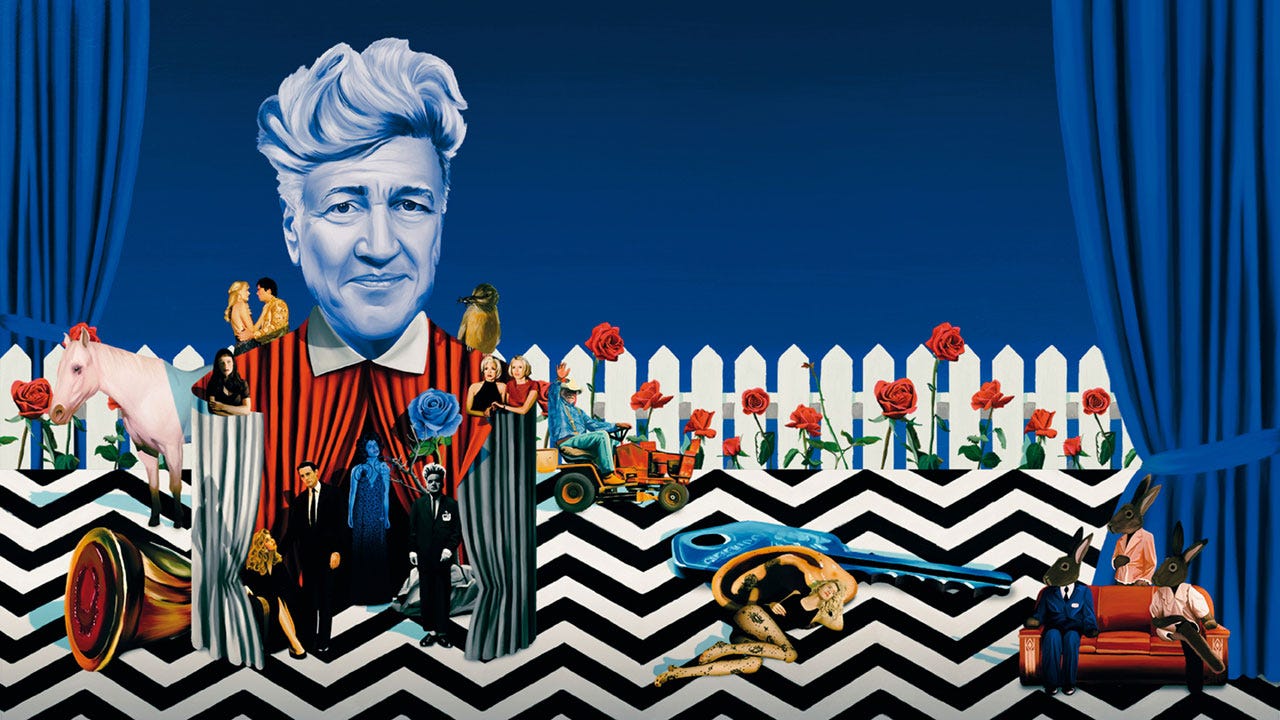
Then there is death. When David Lynch died on 16 January 2025, cinemas worldwide mobilised with extraordinary speed. The Belcourt Theatre in Nashville programmed Mulholland Drive and Eraserhead. Alamo Drafthouse launched “In Dreams: Films of David Lynch” across its circuit. Seattle’s independent cinemas collaborated on a year-long retrospective. The American Cinematheque in Los Angeles mounted a comprehensive season. At least the BFI Southbank waited a whole year before launching David Lynch: The Dreamer (below). These were not cynical cash-grabs; they were genuine acts of cultural mourning. But they were also reactive. The supply of Lynch screenings was determined not by sustained audience demand but by a biographical event.
Push Versus Pull (And Why the Distinction Blurs)
In the music streaming world, the push-pull distinction has largely collapsed. Spotify curates playlists based on your listening history, surfacing catalogue tracks you are statistically likely to enjoy. The listener does not need to seek out “Dreams” by Fleetwood Mac; the algorithm delivers it. The result is a feedback loop where familiarity breeds more familiarity, and catalogue consumption becomes self-reinforcing.
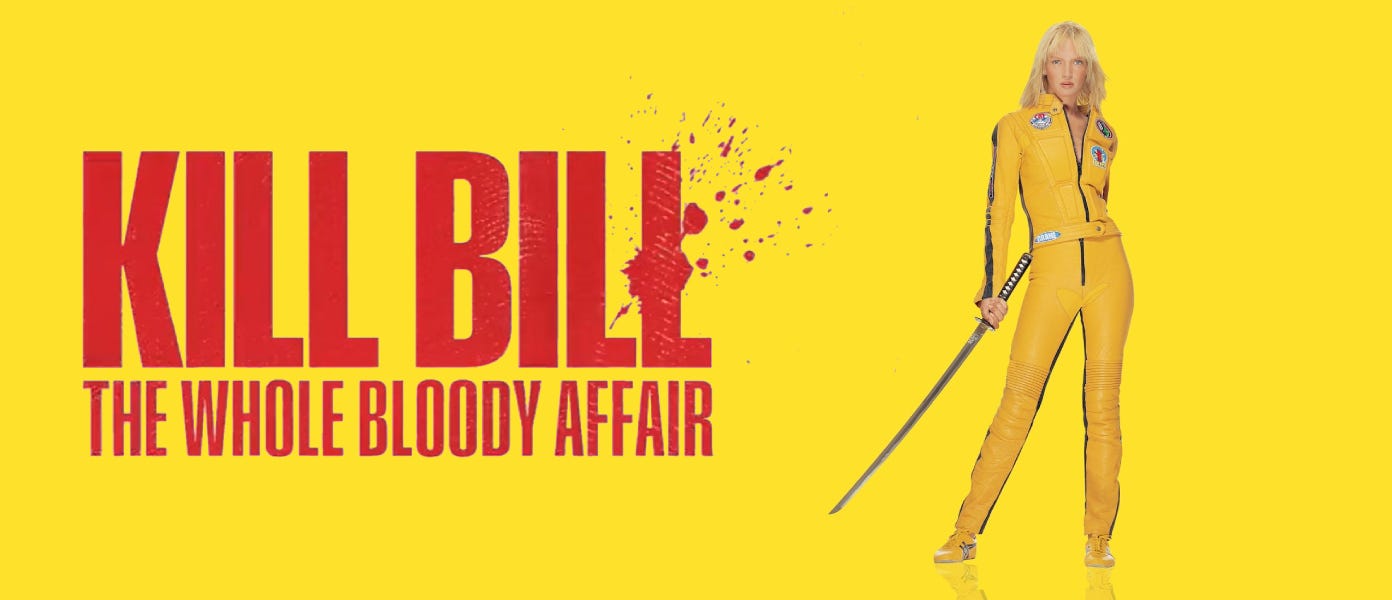
Cinema does not yet have an equivalent algorithmic intermediary between audience and screen, but the dynamics of push and pull are no less complex. When Quentin Tarantino announces that he wants to re-release Kill Bill Vol. 1 and Vol. 2 as a single film, that is a push driven by creative ego and brand power. When the Prince Charles Cinema in London sells out a 35mm screening of The Thing on a Tuesday night, that is genuine audience pull. When Park Circus programmes Barry Lyndon for its 50th anniversary and it goes viral on TikTok, that is push creating the conditions for pull. As Park Circus CEO Doug Davis told Variety at the Lumière Film Festival in Lyon last October, comparing the revival to vinyl records: “There’s a social and cultural cachet now to watching old movies and being first to know.”
But there is a crucial difference between music and cinema that makes the pull model both harder and more interesting. Listening to a familiar song costs nothing beyond the monthly subscription and demands no more than background attention. Going to the cinema to see a 50-year-old film is an active, two-hour commitment requiring physical travel, ticket purchase, and undivided attention. The fact that audiences (particularly young ones) are choosing to do this in growing numbers suggests something more profound than algorithmic inertia. It suggests genuine cultural hunger.
Gen Z: The Vinyl Generation of Cinema
The demographics are striking. According to Cinema United’s 2025 “Strength of Theatrical Exhibition” report, Gen Z moviegoer attendance grew by 25% over the preceding 12 months, the largest increase of any age group. Gen Z audiences averaged 6.1 cinema visits per year, up from 4.9, with 41% seeing six or more films annually (compared to 31% in 2022). According to Comscore PostTrak data shared with the Hollywood Reporter, they represented 39% of the total cinema audience in North America in 2025, up from 34% in 2019.
What is less well captured in those headline figures is the role that repertory programming plays in Gen Z engagement. As Comscore’s Paul Dergarabedian told the Hollywood Reporter, Gen Z is “ironically drawn to the classic analog experience of going to the movie theater” and able to “blend this traditional activity with their digital lives, using theater outings as fodder for social engagement.” The pipeline runs from Letterboxd (which grew from 1.8 million users in mid-2020 to 17 million by the end of 2024) and TikTok to the box office. Mark Cosgrove of Bristol’s Watershed recalled to The Guardian programming Edward Yang’s Yi Yi (2000) in a small auditorium expecting 40 attendees; 170 showed up, a large percentage of them young people. As Screen Slate founder Jon Dieringer noted in the same Guardian piece, online platforms can now directly influence which films get restored and re-released: “There’s definitely places in the US like the Metrograph that trends on Letterboxd and can influence getting a restoration.”
This mirrors a pattern in music. Short-form video platforms drove 36% of music discovery among US rock fans in 2025, according to Luminate, with catalogue tracks frequently going viral on TikTok. US vinyl sales grew for the 19th consecutive year in 2025, up 8.6% to 47.9 million units, with more than four in ten records sold at independent record stores. The parallel is not incidental. Both vinyl and repertory cinema represent a deliberate choice to engage with culture in a more intentional, physical, and socially legible way. The act of watching Blue Velvet on a cinema screen and the act of buying Rumours on vinyl serve similar identity-construction functions for a generation raised on frictionless digital abundance.
The Bad Bunny Question
Every industry conversation about streaming dominance eventually bumps up against the exceptions. In music, those exceptions have names: Taylor Swift, Sabrina Carpenter, The Weeknd, and above all Bad Bunny, who was Spotify’s most-streamed artist globally for the fourth time in 2025, with nearly 20 billion streams. His album Debí Tirar Más Fotos became the first all-Spanish-language album to win the Grammy for Album of the Year. In February 2026, he held the entire top 25 of the Hot Latin Songs chart simultaneously, a record.
Bad Bunny’s significance goes beyond sheer volume. He represents a genre (Latin trap, reggaeton, and now a broader Puerto Rican musical synthesis) that was essentially invisible to the mainstream English-language music industry a decade ago. Latin music was the fastest-growing streaming genre in the US in 2024, with a 15% increase, according to Luminate’s mid-year report. And crucially, Latin music fans are more likely to stream recent releases than deep catalogue: 35% of all Latin streams in the US are for music released within the last 18 months, compared to barely a quarter for the overall market. Bad Bunny is not just big; he represents a model where new music thrives because it speaks to an audience whose cultural identity is bound up with the contemporary.
So what is cinema’s Bad Bunny? The honest answer is anime.
Consider the parallels. Like Latin music, anime was long treated as a non-English niche genre by the mainstream Western exhibition industry, tolerated rather than embraced. Like Bad Bunny bypassing English-language radio gatekeepers through streaming, anime bypassed traditional distribution through platforms like Crunchyroll. And like Latin music’s surge being driven by young, passionate, digitally native fans, anime’s theatrical performance has been propelled by Gen Z audiences willing to turn out in huge numbers. Demon Slayer: Infinity Castle, Chainsaw Man: Reze Arc, and the Studio Ghibli library re-releases all performed at levels that would have been unthinkable for Japanese-language animation in Western markets a decade ago. As Variety reported, video game adaptations, anime, and horror films all excelled in 2025, with young moviegoers specifically driving attendance numbers.
The lesson from Bad Bunny is not just that mega-acts can break through. It is that genre ecosystems with passionate, identity-driven fanbases can sustain new releases in a way that the broad middle market cannot. For cinema, this points to anime, horror, and perhaps Bollywood or K-drama adaptations as the genres most likely to resist the gravitational pull of catalogue dominance.
The Ecosystem Risk
Here is where the music analogy gets uncomfortable. The dominance of catalogue music on streaming platforms has not simply meant that old songs are doing well. It has meant that the economics of breaking new artists have become brutally difficult. There are 253 million tracks sitting on audio streaming services. An average of 106,000 new tracks are uploaded every day. And 88% of those tracks receive fewer than 1,000 streams per year. The major labels now account for just 3.8% of daily uploads, with 96.2% coming from independent and DIY distributors. The long tail has become a very long tail with almost nothing at the end of it.
For cinema, the equivalent risk is not that repertory screenings will directly crowd out new releases. A Tuesday evening showing of Romero’s Night of the Living Dead does not compete with a Friday opening of a new tentpole for the same audience. The risk is subtler and more systemic. If exhibitors discover that a curated programme of well-known catalogue titles delivers reliably strong per-screen averages at better margins (no VPF, lower or zero rental rates, known audience), they may gradually reduce their appetite for the risky bet on a mid-budget original film from an unfamiliar director. The bad and mediocre mid-budget films that fail today are the training ground for the directors, writers, and producers who make tomorrow’s great films. An industry that substitutes proven catalogue for unproven new talent is an industry consuming its seed corn.
Music has already reached this point. When catalogue consumption accounts for nearly three-quarters of the market, the pipeline for developing new artists narrows dramatically. The exceptions (Swift, Bad Bunny, Carpenter) are so successful precisely because there is so little competition at scale. The middle has been hollowed out. Cinema should study this carefully, because the same hollowing is already visible in the gap between franchise tentpoles and everything else.
What Studios Should Do: Make Re-Releases a First-Class Strategy
The prescription is not to resist repertory programming. The repertory renaissance is one of the most genuinely encouraging trends in exhibition, a sign that cinema’s cultural function extends far beyond being a delivery mechanism for new product. Park Circus is doing vital work in making heritage cinema commercially viable for exhibitors of all sizes, from single-screen independents to major circuits. As Doug Davis told Variety, “The multiplexes are quite delighted with the way the classics are performing,” noting that the revival attracts not just older audiences but also younger viewers, thanks in part to savvy promotion across platforms like Letterboxd.
But the way studios currently approach re-releases is almost comically haphazard compared to how they treat their new release slates. At next week’s CinemaCon and CineEurope in June, studios will present detailed, carefully choreographed previews of their upcoming films, complete with exclusive footage, talent appearances, and precise release date windows. Re-releases, by contrast, are treated as afterthoughts: an anniversary here, a death-prompted retrospective there, the occasional opportunistic tie-in when a sequel is approaching. Rinse-repeat.
This needs to change. Hollywood studios should present their catalogue re-release strategies at CinemaCon and CineEurope with the same rigour and forward planning they apply to new tentpoles. Exhibitors deserve to know not just that Top Gun is getting a 40th anniversary screening in May 2026, but what the studio’s systematic plan is for its heritage library over the next two to three years. Which titles are getting 4K restorations? Which anniversaries are being supported with marketing spend? What is the promotional strategy for reaching Gen Z audiences through Letterboxd and TikTok?
More importantly, studios should move beyond the anniversary-and-death model towards a genuine audience-informed approach. The data exists. Letterboxd can tell you which films are trending among 18-to-25-year-olds right now. TikTok can identify which classic films are generating viral moments. Spotify’s model of algorithmically surfacing catalogue tracks based on listening patterns is imperfect, but it at least begins with the audience rather than the calendar. Cinema’s equivalent would be a data-driven repertory strategy where audience demand signals (social media trends, streaming watchlists, search data) shape programming decisions alongside anniversary dates.
Park Circus’s “Pitch to Park Circus” competition, run in partnership with Cinema Rediscovered at Bristol’s Watershed, offers an intriguing model: inviting curators to propose repertory seasons from the Park Circus library, judged on the quality of the idea, originality, and audience potential. This is programming that begins with curatorial intelligence and audience insight rather than the blunt instrument of a round-number anniversary. It deserves to be scaled.
Coda: The Attention Economy’s Cruelest Irony
The music industry’s catalogue problem contains a cruel irony that cinema would do well to contemplate. The technology that was supposed to democratise access to all music ever recorded has instead concentrated listening around a shrinking pool of familiar favourites. The infinite jukebox plays the same songs. Spotify hosts 253 million tracks and most of them might as well not exist. AI music is not the threat; Al Green’s music catalogue is.
Cinema is not there yet. The theatrical experience, with its commitment, its physicality, its communal dimension, remains a powerful counterweight to algorithmic passivity. When a 22-year-old chooses to see Yi Yi on a cinema screen rather than streaming it at home, that is an active act of cultural engagement that no playlist algorithm can replicate. But the industry cannot take this for granted. The repertory renaissance needs to be nurtured with strategic intelligence, not just exploited with opportunistic anniversary re-releases.
The music business learned too late that letting algorithms programme the culture means letting the past eat the future. Cinema still has time to get this right. But not much.
Genius! Thanks Patrick, you’re unvaluable.